

Fish Sauce.
Plus my recipe for a vibrant, healthy 20-minute Salmon Larb Bowl that can be enjoyed at any temperature!
Welcome to ingredient, where once a month I take a deep dive into one of my favourite seasonal or store cupboard ingredients. This month I’m focusing on fish sauce: the salty, pungent liquid condiment essential to South East Asian cooking which dates back to ancient Greek, Roman and Chinese kitchens.
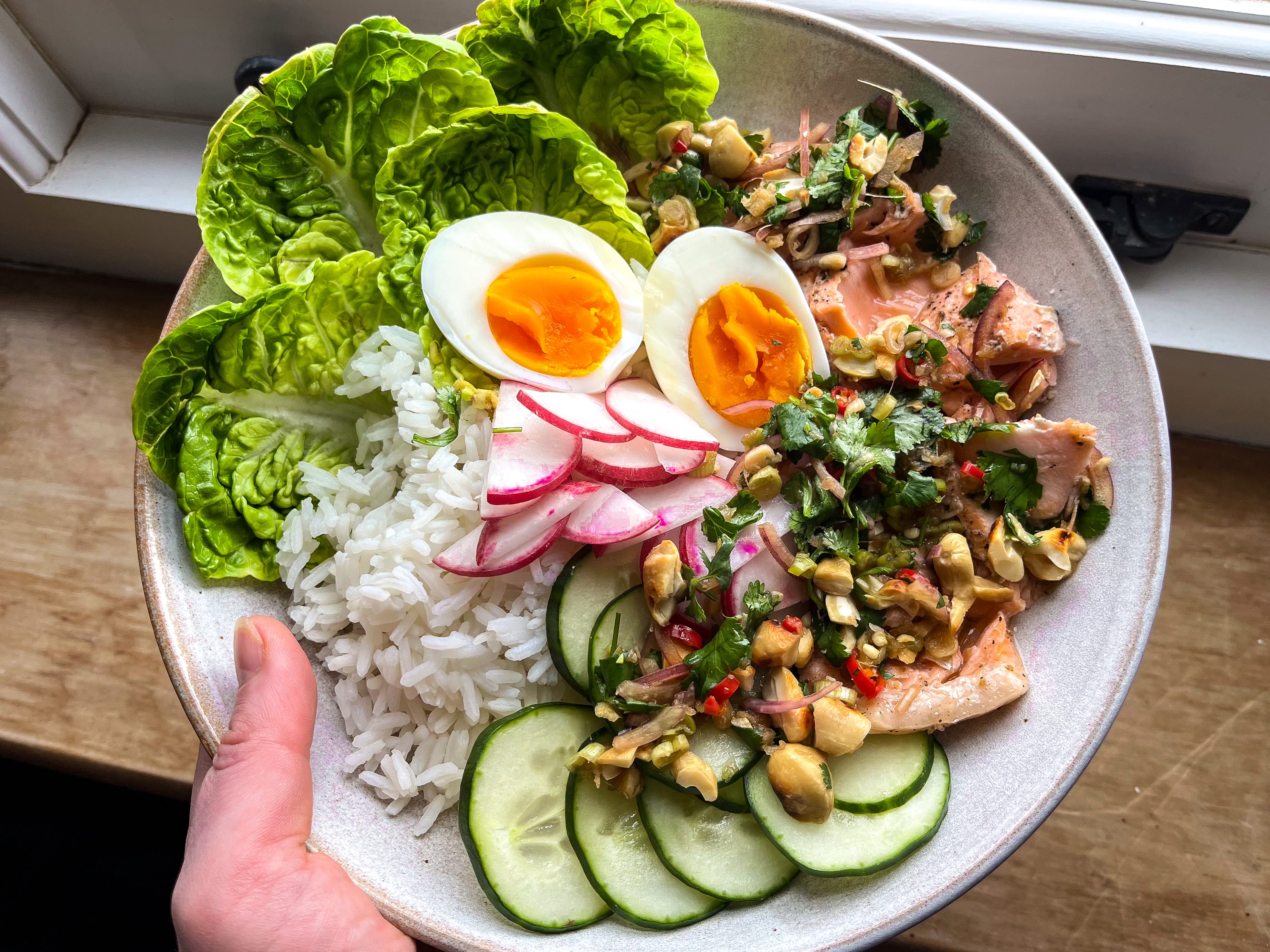
I’m on a bit of rice bowl kick at the moment (I’ve got a saucy Korean beef mince and kimchee number on the front page of my website right now) so to start off this month’s ingredient we’re giving a fillet of white wine-poached salmon the Larb treatment with a fish sauce and lime-spiked aromatic dressing, served alongside rice, salad veggies and a boiled egg in a ‘serve it at any temperature’ meal situation inspired by Laotian cuisine.
I’m still working on the rest of this month’s recipes, but I have high hopes for the pork rib-eye steaks and packet of sustainable white fish chunks that came with my last meat delivery once I introduce them to a bottle of the fishy stuff!
If someone has shared this post with you (please thank them for me!) and you’re not already a subscriber, do hit the button below so you don’t miss out! And if you fancy exploring the archives for more seasonal inspiration, last April I was on hiatus, but the year before we took a deep dive into all the possibilities to be found in a simple bunch of spring onions:

I have a degree in English Literature, because I listened to all the teachers and school careers advisers who incorrectly told me that my degree would be of more ‘use’ in the subject rather than the degree I wanted to do in Classics. Now as an adult, I know what I wish grown ups had told us all at the time; that all humanities degrees are basically the same when it comes applying to a job, that they allow you to tick affirmative in the undergraduate degree box and move onto the next part of the form. I also wish someone had told me there were other options available to me other than a university degree, but to be fair to them I only figured out that a culinary diploma would probably have been of more use to me halfway through my second year when I’d already spent more hours than I could possibly count debating if it was Frankenstein or his monster who was at fault in seminars, and reading way too much into book one of John Milton’s Paradise Lost.
On the flip-side, a literature degree left me so sick of the discipline it took me years to get back into reading fiction for enjoyment (I simply started reading cookbooks cover-to-cover instead), but my love and fascination with the classical world has never dimmed. And, strangely considering how much education has been crammed into my head over the years (including several modern languages and musical instruments I’ve since forgotten) it is my early, pre-university classical education that has stuck with me. I still have strong opinions on the political context of Ovid’s Ars Amatoria, I recently gave my parents a lecture on the exact technique of the red and black figure pottery we were viewing in a museum in Sicily to the great amusement of the nearby docent, and my recall of passages of the Res Gestae Divi Augusti, fifteen years later is disturbingly accurate (if you understood exactly none of that, you’re not missing much!)
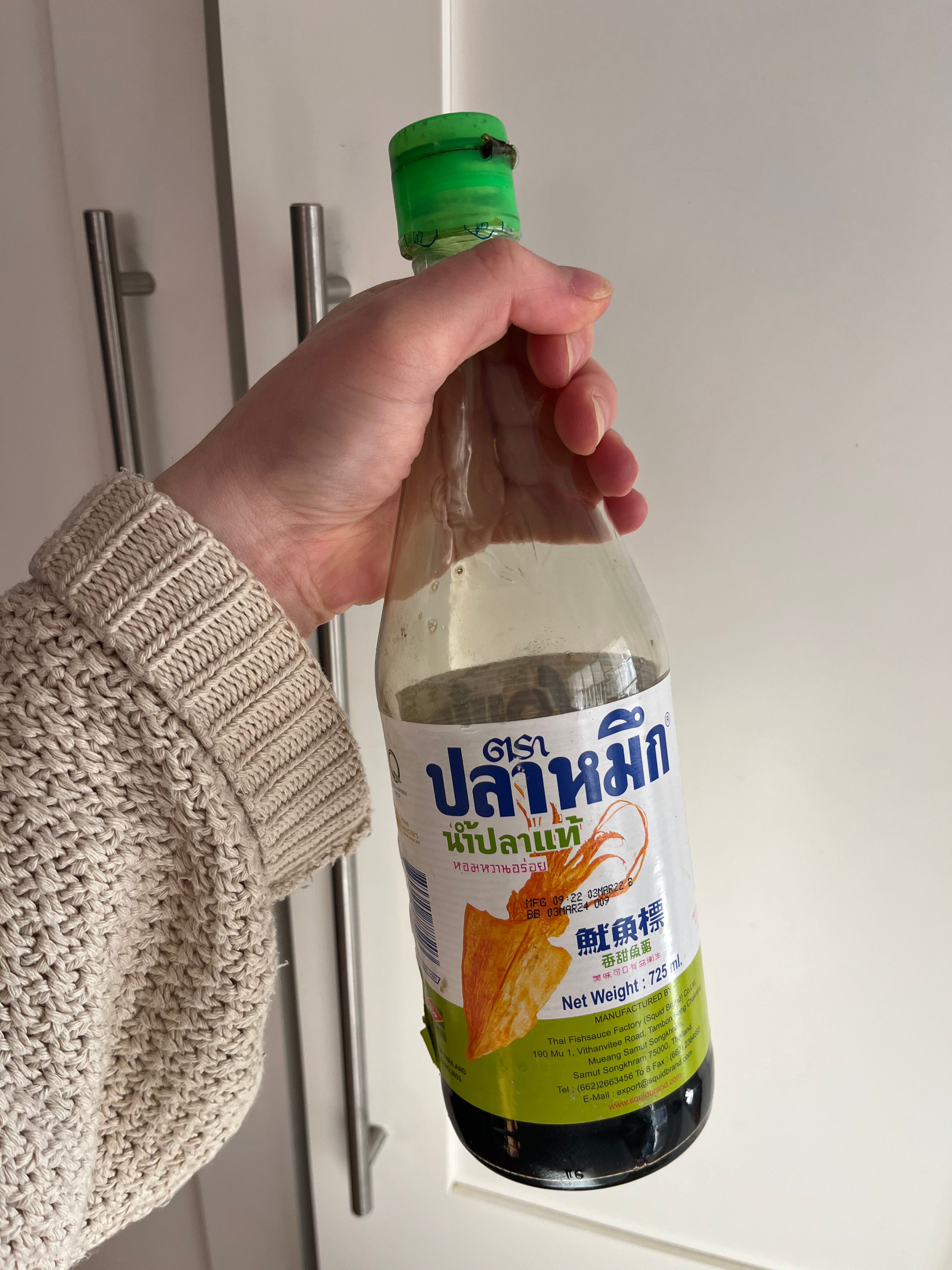
One fragment of my classical education I recall every time I reach for the bottle of green-topped Squid brand fish sauce (Pliny the Elder, if you want to get specific) when I want to season a curry, mix a dressing or build a marinade is the production method of garum, a ubiquitous Roman seasoning made from sun-fermented oily fish, fish guts and salt I’ve heard academics refer to as their version of tomato ketchup; archaeological evidence and contemporary sources indicate that it went on practically everything. Violently pungent (as is probably obvious) traces found in the pottery indicate that terracotta vats were utilised for the fermentation process (or purification process, to steal the language of multiple writers of the time). It was not all that different from the version we cook with today, except for the guts part, which already was less typical of other regional fermented fish-and-salt based condiments, for example the Ancient Greek version.

Enjoyed by both rich and poor (though the quality of product found on different Roman tables varied wildly) it was a highly prised ingredient, and whilst not treated the same way in Italy today, modern fish sauce is happily a deeply savoury, umami condiment that has stood the test of time.
As I mentioned above, fish sauce lends itself best where you want to add an aromatic saltiness to South East Asian-inspired dishes; typically where you find fish sauce you’ll find the balancing acidity come in the form of fresh lime juice, and the flavourings and seasonings of garlic, fresh chillies, ginger and lemongrass probably won’t be far behind.

Fish sauce is essential to making Vietnam’s pungently aromatic nước chấm dipping sauce, is found as a table condiment in Thailand, adds a little something to coconut milk-based curries and sauces, and many meat marinades would otherwise lack if simply seasoned with salt or soy sauce; fish sauce is what gives them their body. Here in the UK, Squid Brand is the anchovy-based Thai fish sauce I like the best, and I know a lot of American chefs are evangelical about Red Boat (David Lebovitz wrote a brilliant piece about fish sauce production visiting their factory in Vietnam back in 2019) - but I’ve never had a supermarket version that wasn’t decent. Typically the fish sauce available for sale (unless you’re after something premium and specifically aged to use as a condiment) has been fermented for 1-2 years, usually anything under the 2 year point tends to be from a cheaper brand. Anchovies are the most commonly used fish, but any small, oily fish might be packed into the bottle in your kitchen cupboard.

Probably my favourite fish sauce context is in a salad; whilst I’m still working on recreating the fantastic (and violently spicy) fish sauce-spiked yum neau (steak salad) at my favourite Thai restaurant, a cool fish-sauce-flavouring-protein format I’ve been riffing on for some time is Laos’ national dish: Larb (or Laab, or Laap), a cool mince meat salad heady with aromatics and herbs which is also found on many Thai tables (Laos is sandwiched between Thailand and Vietnam). Keeping with the traditional seasonings of lime, fish sauce and herbs (though skipping the toasted rice powder to make it more accessable - though sometimes, like today, I add texture with toasted chopped nuts instead) I’ve made versions with chicken and beef, but today we’re giving the larb treatment to a fillet of salmon made into a very salad-y rice bowl along with a bit of sticky or Jasmine rice (whichever you feel more comfortable cooking) and a nice hard boiled egg.
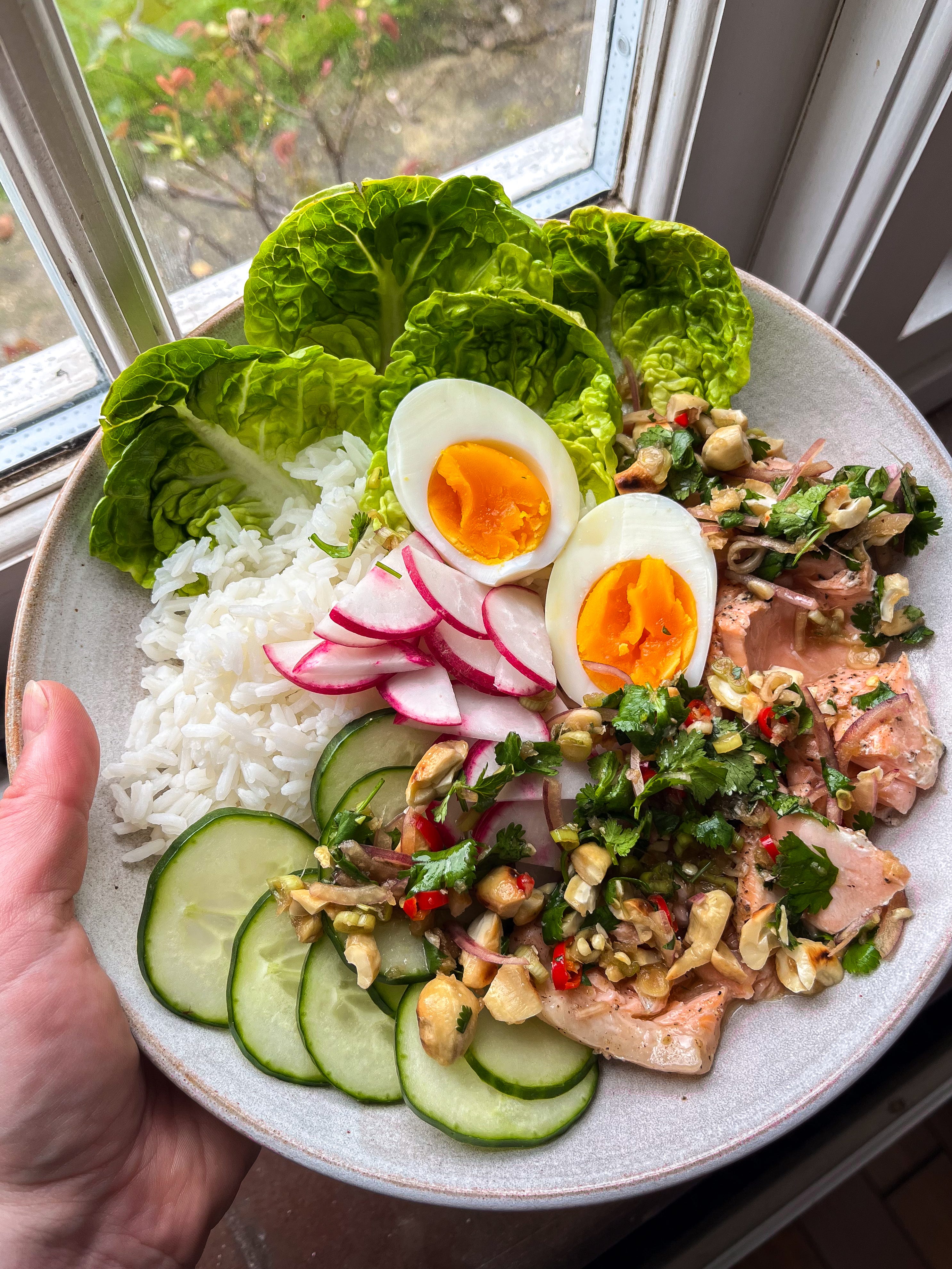
Salmon Larb Bowls
Serves: 2, Preparation time: 15 minutes, Cooking time: 15 minutes
What I love about this larb preparation is it can be served at any temperature; it will taste excellent if you serve it when the rice and salmon are still warm, a little cooler, or from the fridge as part of a lunchbox-friendly meal prep. Also feel free to mix up what is on this rice bowl: start with the salmon, sauce and rice, and take it from there!
Usually for mince-based larb, the seasonings are mixed into the meat, both when it is still in the pan and afterwards depending on the variation of the recipe, but here to suit relatively delicate salmon I’ve turned it into a dressing easy to spoon over a lightly flaked fillet.
For the Salmon Larb Bowls
1 x 250g pouch microwave sticky rice, or 100g jasmine rice
baby gem lettuce leaves (about 1/2 head)
cucumber slices (about 1/4 cucumber)
radish slices (about 6 good-sized radishes)
2 x salmon or trout fillets
white wine or water
freshly ground sea salt and black pepper
For the Larb-inspired Dressing
2 tbsp fresh lime juice
1 tbsp grated ginger
1 tbsp fish sauce
1/2 tsp maple syrup
1/2 small red onion, halved then sliced into quarter pieces
2 birds eye chillies, finely sliced
2 spring onions, finely sliced
small handful fresh coriander, roughly chopped
small handful roasted cashews, roughly chopped
Pre-heat the oven to 180C. Cook the rice as per the packet instructions, be that dry rice or microwave.
To cook the fish, create two fillet-sized boats out of two sheets of foil and place the salmon skin side down on them. Splash a little white wine into each (just enough to help them steam) and season with salt and pepper. Wrap the boats up by sealing the tops like a tent, and cook for 10 minutes. Then, open the tops to let out the steam if you’re not already ready to plate up.
To make the dressing, stir together the lime juice, grated ginger, fish sauce, and maple syrup. Then stir in the chopped chillies, spring onions, coriander and cashews.
Assemble the rice and salad elements of each bowl, then place the salmon fillets, removing the skins if wished. With a fork, gently press down on the fillet to help it break into large flakes (see my pictures to get the general idea!) before spooning over the dressing.
Thank you for sharing your missive with us. You are a n excellent writer and your recipes together with history and beautiful photography make for something I wish I could subscribe too. It’s worth the fee. Perhaps you will write a book and someone will gift me a copy to add to my 60+ year collection of cookbooks and magazines. Like you I’m fascinated by the subject. Now I’m as curious as I was back in the mid-60’s when I took home economics and began an even greater adventure into that world of food science, preparation and presentation.
Really enjoyed reading this, I'm a Classics graduate (because I listened to all the school advisors who said it would be 'easier to get into' than the subject I wanted to do, which was chemistry) and also find myself thinking about garum all the time! Can also completely sympathise with the years after university where you can't stomach your subject any more, it's taken me a good 15 years to even consider reading Ovid's Amores again.