

Beetroot.
All attempts at growing it have failed, so I've decided to focus on cooking it instead!
Welcome to ingredient, where once a month I take a deep dive into some of my favourite seasonal and store cupboard ingredients. This month I’m focusing on beetroot, a wonderfully earthy root that I may not have yet learned how to grow, but which I absolutely love to cook!
My first recipe this month is a wonderfully vibrant (in both colour and flavour) Persian-inspired hot pink yogurt dip studded with garden herbs perfect for the incoming ‘rosé and nibbles on the patio’ season. Later this month I’ve got a handy beetroot and lentil salad coming which works either as a pack up for lunchboxes and picnics, but which also looks beautiful presented on a platter for entertaining, and whilst it is still a work in progress I’m also hoping to make beetroot the star of dinner with an easy weeknight supper recipe.
If someone has shared this post with you (please thank them for me!) and you’re not already a subscriber, do hit the button below so you don’t miss out! And if you fancy exploring the archives for more seasonal inspiration, last May I was on hiatus, but the year before we were doing lots of delicious warmer weather things with pistachios (including making a wonderful chicken number with a pistachio and avocado relish I really must dust out again!):


I didn’t like beetroot growing up, because growing up beetroot came in shrink-wrapped packets infused with horseradish, because that is how my mother likes it. And unfortunately, I don’t like horseradish. Luckily though, some raw beetroot arrived in a vegetable box some years ago, and, hating waste, I followed a Greek recipe for dressing cubes of cooked beetroot in a sharp red wine vinegar and date molasses dressing before stirring through Greek yogurt and scattering it with herbs.
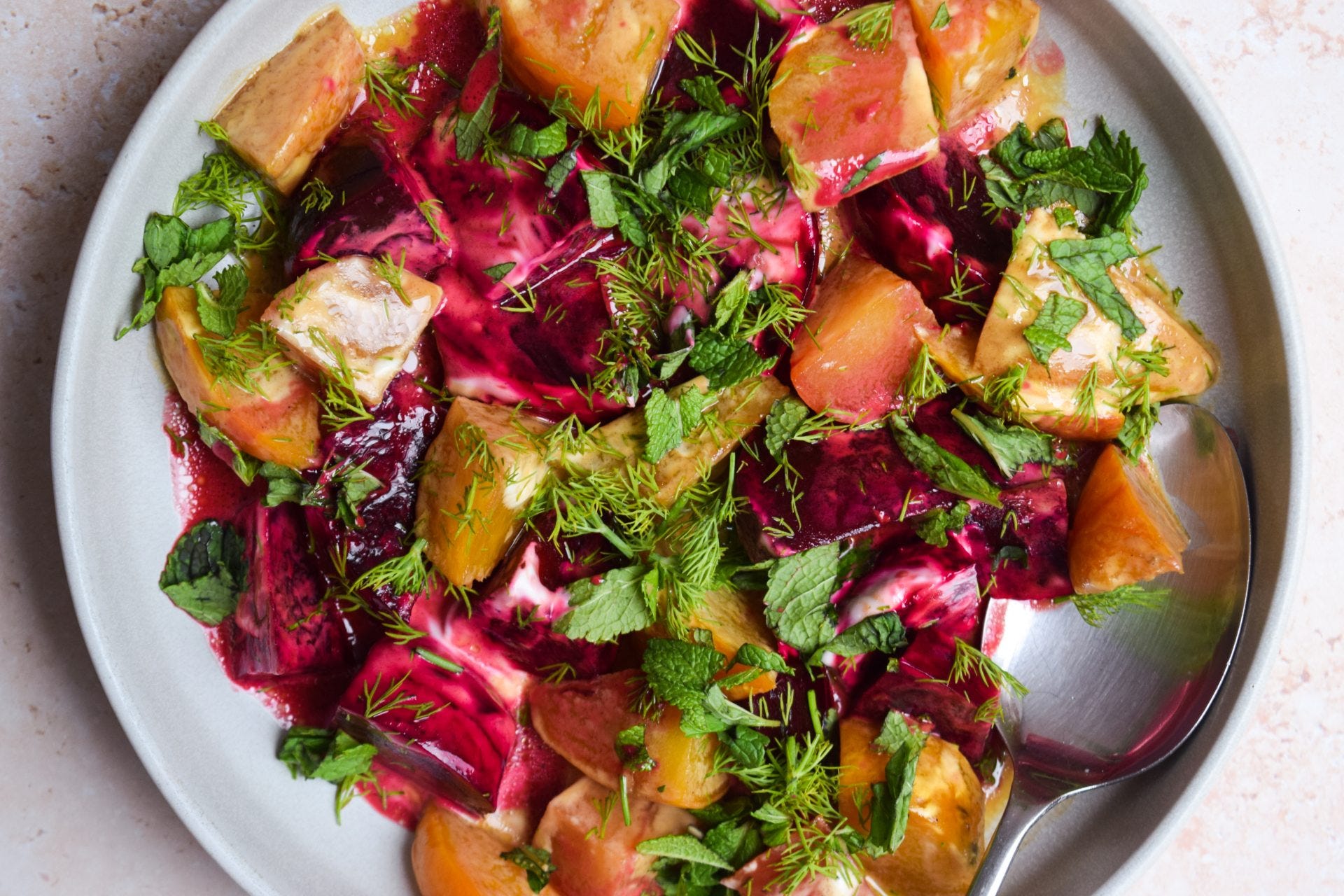
Those of you familiar with Greek cooking will have recognised the recipe I’m describing as Patzarosalata, and it to this day still remains one of my favourite beetroot preparations: creamy, acidic, earthy, and beautiful on the plate.

Beetroot - or beets as my American readers might refer to them - are one versatile root. You can boil them, roast them and eat them raw. They can be kept in chunks, grated and pureed, pickled, and preserved. Their leaves also taste great in salads, and you’ll recognise the immature leaves from many bags of mixed lettuce (and, unfortunately raw, dry grated shreds of the root too - I blame those hard little strips gathered at the bottom of the bowl for why so many people say they don’t like beetroot!) Generally finger-staining red (which is why I think so often it comes pre-cooked) you can also get lovely golden varieties which you can peel with impunity (though I often solve the issue by wearing disposable gloves) and candy striped beetroot whose whimsical stripes are only revealed when the root is cut into.
If you wish to grate raw beetroot you’ll need a very good, very strong grater, but my preferred method is to top and tail them, and boil them in salted water until fork-tender; depending on their age and size this can take anything from 20 minutes to an hour. Then, when they’re cool enough to touch, wearing the aforementioned gloves their skins will simply rub off. I prefer this method to roasting them in foil packets as many recipes call for, as it is difficult to seal the packets again properly once you’ve unwrapped them to check if the beetroot are done yet. I feel no household needs enough beetroot at once to instead roast them in an easy-to-check foil-covered tray; let us leave that for the professional kitchens!
In the cooler seasons just past beetroot stands out as the key ingredient in Ukrainian borscht (as well as in other variations from neighbouring Eastern European countries), appears in many winter salads of the region, and is why chrain (an Asakanazi Jewish condiment flavoured with horseradish - no wonder it is my mother’s favourite preparation!) is red. Beetroot pickles are common in Scandinavia (where they also grate beetroot into minced meat), and heading to sunnier climbs in South East Asia beetroot is often curried or made into salads and sambols, and in Australia I’ve noticed on Pinterest that it is a common burger topping. In the Middle East and Mediterranean, beetroot is treated like any other vegetable, game for salads and regional sides.
As previously mentioned, I have utterly failed at growing actual beetroot roots (rather than just the tender leaves to cut for salads) on every single attempt. I can only conclude that my soil was no good for it (it needs the right amount of acid) and whilst I’m committed to trying again once I finally get a new vegetable garden, tips on growing beetroot would be greatly appreciated; if I fail again I fear it may forever be relegated to being a farm shop / Natoora on Ocado purchase.

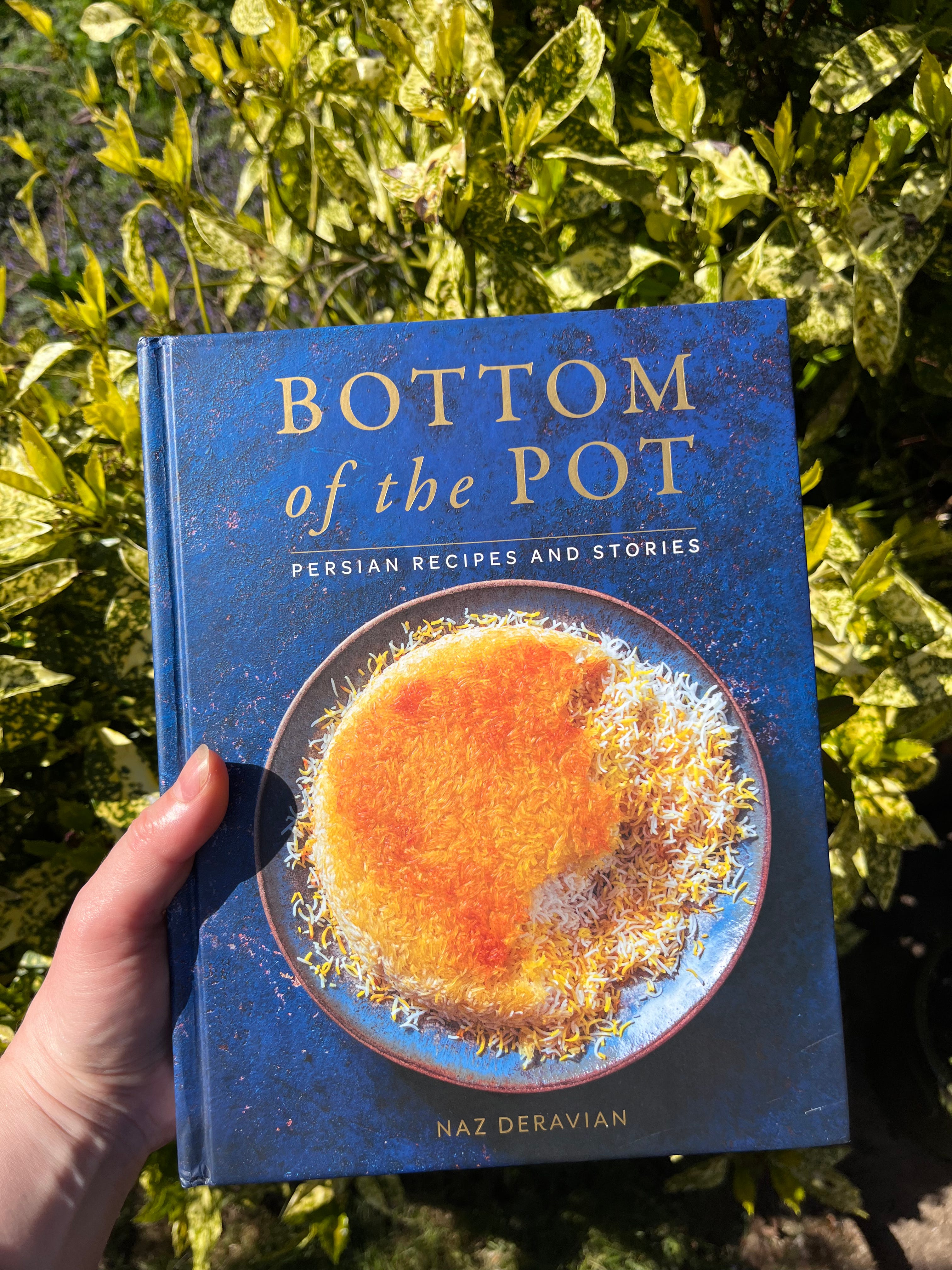
As I mentioned at the top of this newsletter, today’s recipe is just the thing with some crudités, flatbreads, and a good glass of chilled rosé, and rather than being just my own recipe, I’ve adapted it from Bottom Of The Pot: Persian Recipes and Stories by Naz Deravian, a wonderful, joyful introduction to the Persian table which I’ve promised myself I’m going to cook from more this year. Naz left Iran in 1979 with the revolution, and when I first read the book the winter before last it really captured for me something of how I teach myself about my own culture through exploring Jewish recipes; Naz tries to hold onto her memories of her Tehran through cooking.
Borani-yeh Laboo is a yogurt and beetroot dip that really leans into the Persian love of sour foods, heavy on the vinegar, whilst still managing to be earthy and creamy as well as tart. I loved Naz’s original, fragrant with dried mint and with the lovely, unique flavour of tarragon, perfect now my pots of it are starting to become abundant enough to cook with once more. However, the version I’ve included below is a bit lighter on the vinegar, and also includes a spoonful of date molasses for a rounding sweetness I often include in vinegar-dressed beetroot preparations.
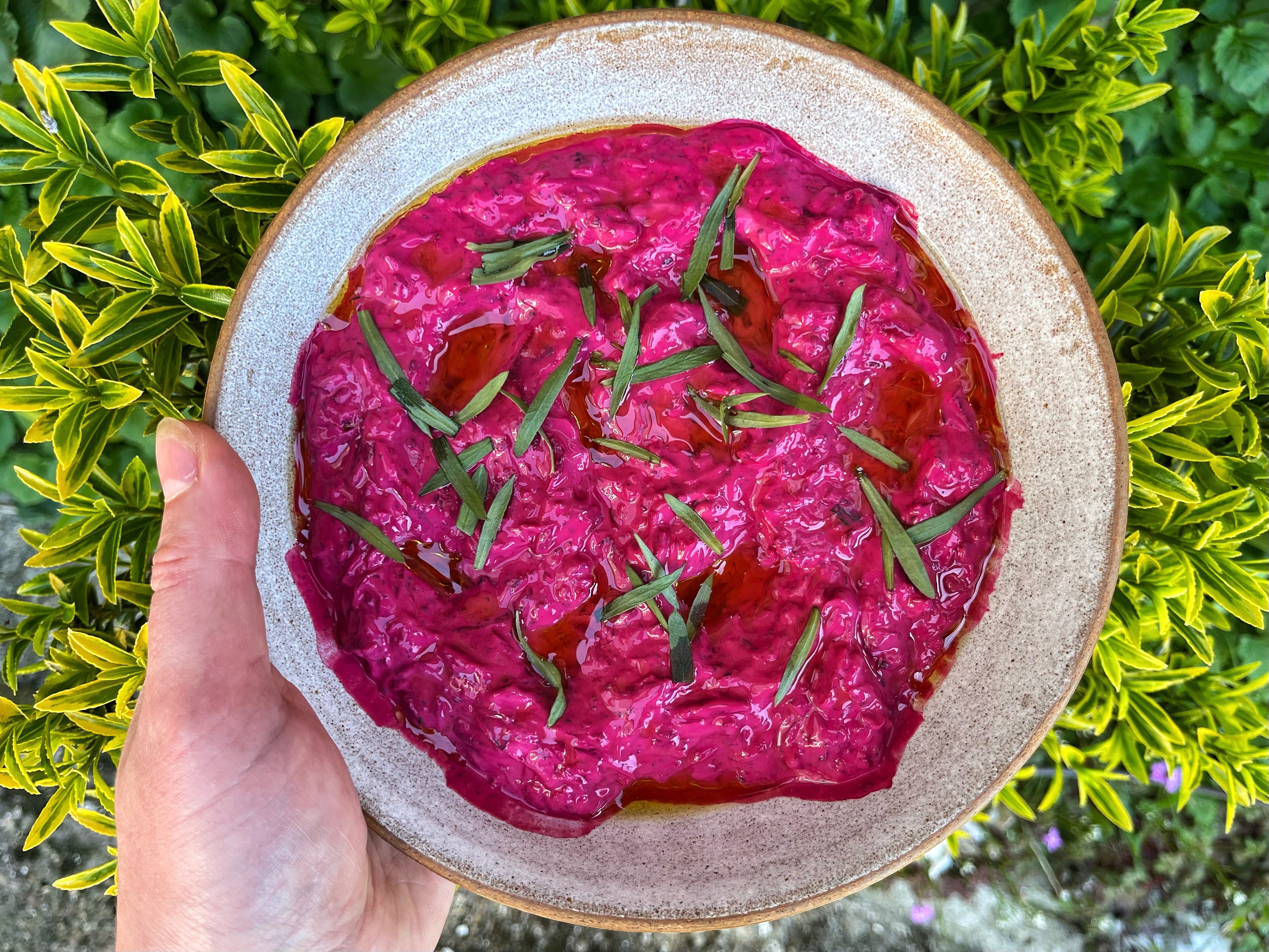
Persian Beetroot & Yogurt Dip
Serves: 4-6, Preparation time: 10 minutes, Chilling time: 1 hour
This dip will keep for a good week in the fridge, something to keep coming back to. Don’t be tempted to skip the hour chilling time, because not only does it allow the flavours of the dip to meld and come together properly, but it also turns the colour of the dip from simply ‘bright’ pink to ‘electric’!
1 medium beetroot, cooked and peeled (see preferred method above!)
240g thick Greek yogurt
2 tbsp red wine vinegar
1 tsp dried mint
1 tsp chopped fresh tarragon, plus extra for serving
1/2 tsp date molasses
1/4 tsp flaky sea salt, plus extra to taste
extra virgin olive oil
Grate the beetroot on the medium hole of your box grater (wear gloves for this!) before stirring the gratings together with the yogurt, vinegar, herbs, date molasses, and sea salt. Chill for 1 hour.
Stir well, and taste to see if you want to add any more salt. Then, transfer the dip to a serving dish and drizzle generously with olive oil, scattering over a few more tarragon leaves.
A German friend introduced me to a beetroot salad recipe popular there: grate a scrubbed, unpeeled raw beetroot on the largest grater holes or disc. Do the same to a similar-sized washed unpeeled apple. Mix together, season and add a generous splash of vinegar. I prefer a mustardy, mildly garlicky vinaigrette but either is delicious.