

Halloumi.
Plus, my 30-minute recipe for Chickpea, Halloumi & Vermicelli Stew.
Welcome to ingredient, where once a month I take a deep dive into some of my favourite seasonal and store cupboard ingredients. This month I’m focusing on halloumi: the pleasantly squeaky, salty, grillable Cypriot cheese whose unique texture and mild yet salty, creamy flavour deserves so much more than being relegated to just the vegetarian option at the barbecue.
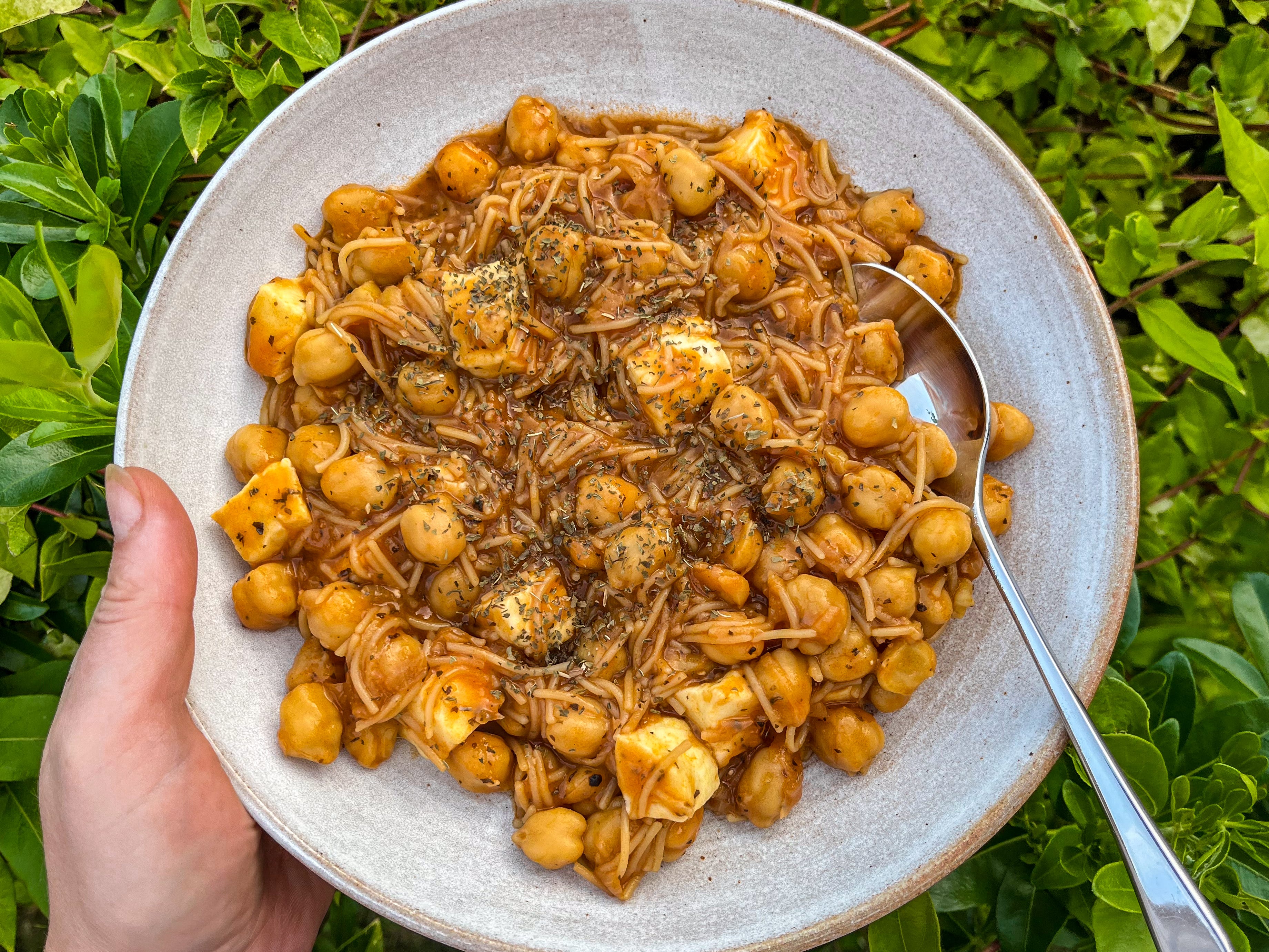
My first recipe this month is one that tastes of warmer climes but is for one of those slightly cooler summer evenings: a relatively quick, hearty stew of chickpeas and lightly toasted vermicelli pasta finished with pleasingly melty chunks of warm halloumi. If you think halloumi needs to take on some colour to taste delicious, try this and think again.
Next week for paid subscribers I’ve got a punchy skewer recipe that totally upgrades a block of halloumi for the barbecue, and at the end of the month we’re doing things with cheese and summer stone fruits; I’ve just not photographed it yet as I finished all the honey in the house working on a slow cooker chicken number for a recipe ghostwriting client over the weekend!
If someone has shared this post with you (please thank them for me!) and you’re not already a subscriber, do hit the button below so you don’t miss out! And if you fancy exploring the archives for more seasonal inspiration, last year I was on hiatus, but the July before we took a look at feta, another Mediterranean cheese alongside a Melting Courgette and Chickpea Salad I’ve already started making again and again this year:

I don’t eat a lot of cheese, because a lot of cheese doesn’t agree with me. But one cheese you can always rely on finding in my fridge? At least one block of halloumi. And as the largest importer of traditional halloumi in the world, my fellow British citizens apparently agree with me that it is a kitchen staple.
To be true Cypriot halloumi (complete with PDO designation) it has to come from Cyprus, and made with traditional methods; usually it is made from a mixture of sheep and goat milk (Odysea’s halloumi ticks all these boxes as well as having a pretty box and long shelf life to gussy up your cheese shelf) but I’m also very partial to White Lake Cheese’s Goat Halloumi-style Cheese made in Somerset. Don’t be too hung up on finding a block with the PDO; for foreign markets a lot of halloumi is now made with cows milk mixed into to sheep and goat to bring down the price and allow for greater production yields. I don’t know about you, but I’d rather go for the highest quality product (especially if it is British made) than get too hung up on provenance.
A brined curd cheese, records of it’s existence and production on Cyprus only date back to the mid-1500’s, though the cheese is said to have been made on the island as far back as 400-ish AD. It has a high melting point, which is why it holds it’s shape well for grilling, but watch out for how easily slices might tear with the traditional fold splitting slices into a sort of squashed ‘U’ shape. Usually, that is why I choose non-traditional halloumi for barbecuing or pan frying. Most often, I pan fry a few slices until golden in the fat-coated pan from cooking lamb chops, then finish them off with a glaze of honey, lemon juice and Aleppo pepper flakes to serve alongside the aforementioned lamb.
Consuming halloumi raw is missing the point; its such a great cheese because it melts beautifully whilst still perfectly holding whatever shape you’ve cut or grated it into, it can develop a lovely golden crust, and because it is salty, creamy and mild, meaning it will take to most flavors you choose to throw at it.
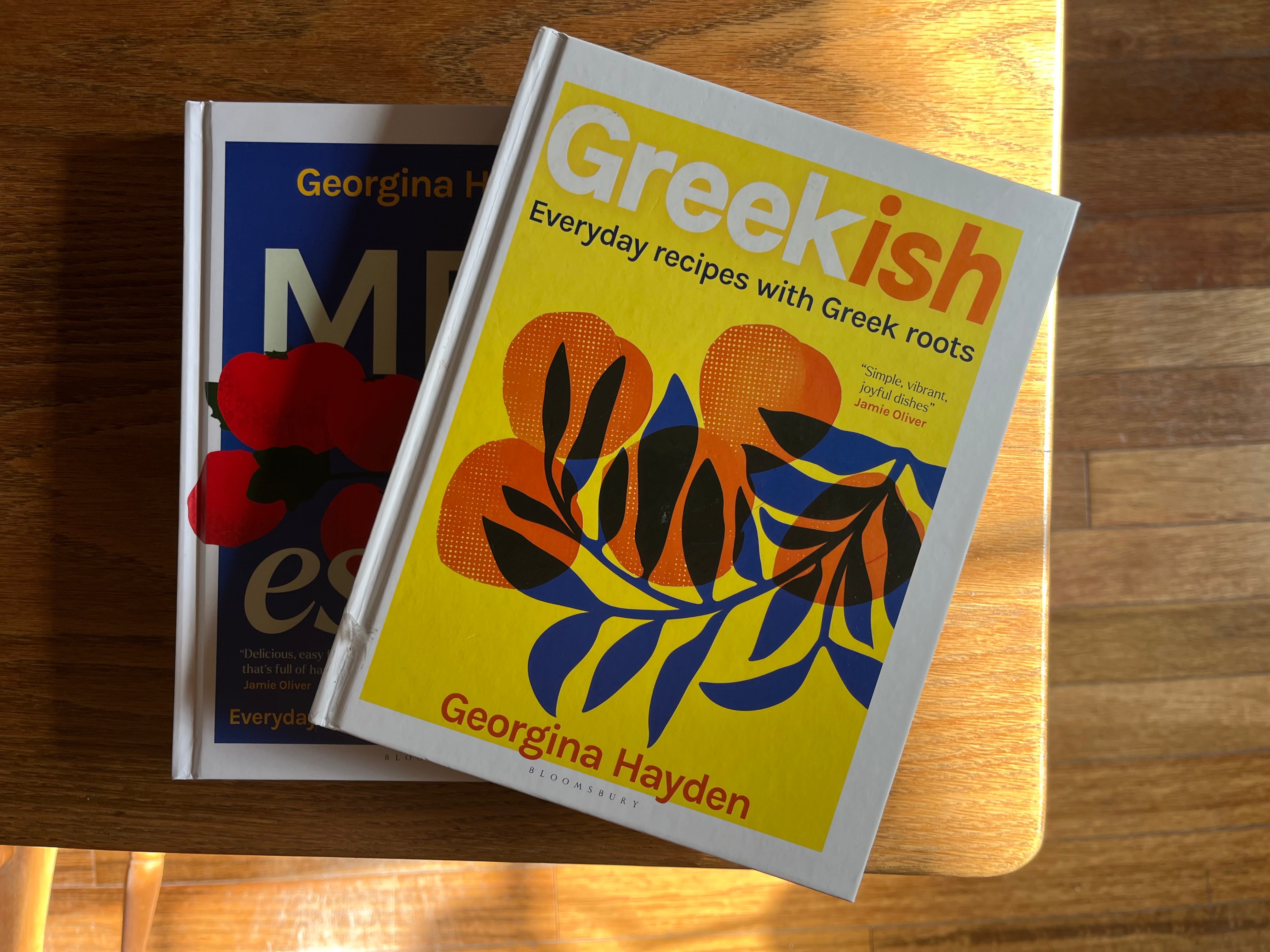
Before I started working on this month’s recipes, as well as the aforementioned pan frying I usually also just grated halloumi into courgette fritters (get ready for the most tender, perfectly seasoned courgette fritters you’ve ever tasted) or used slices as a chicken substitute in a speedy tikka masala. But, then I took British-Cypriot food writer Georgina Hayden’s book Greekish out of the library (and then proceeded to impulse buy her follow up MEDesque in the supermarket!) A celebration of Greek and Cypriot cooking with more of a focus on accessibility than authenticity, it has given me a much broader understanding of how we might best cook with the squeakiest of cheeses.
Preparing for this month yes I’ve pan fried a lot of halloumi as well as loaded cubes onto the aforementioned barbecue skewers, but I’ve also baked it with apricots and fresh thyme (I loved Georgina’s recipe for this but J had some notes I think are rather good ones hence why I’m going off in my own direction with this concept later in the month), grated it onto chicken schnitzel to form a cheesy, crusty coating (this was very tasty where it works, but most of it stuck to the pan — but I’m aware I do need some new pans!), grated it into the pan before pouring egg over the top, adding a flatbread and flipping (I liked this technique), and most enjoyably, dropped it into a simple stew at the end of cooking to add residual creaminess and chunks of gooey, saltiness to the pot. It seems obvious now, but why had I never thought of doing this before?
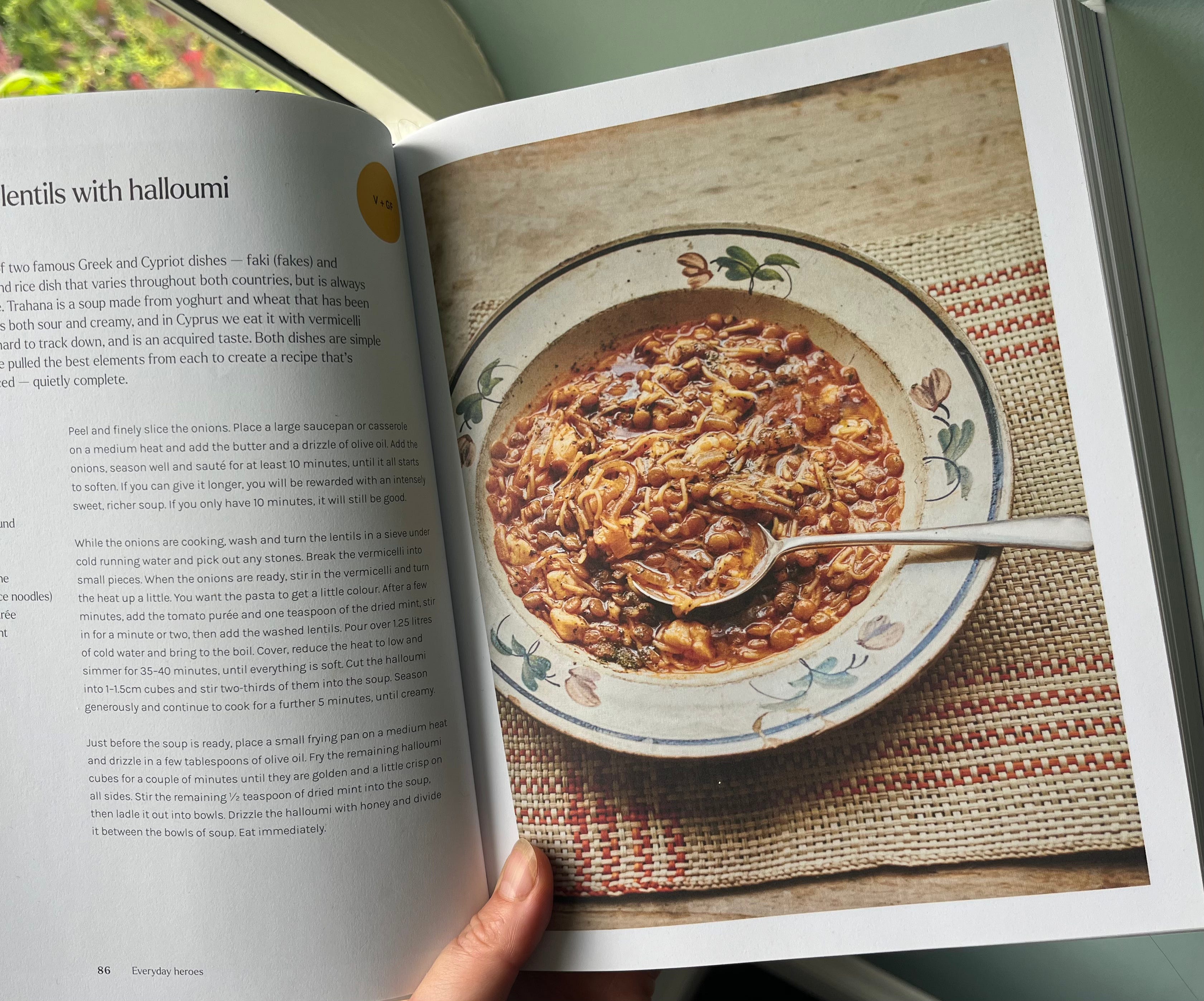
That original bowlful of lentils brings us neatly to this month’s first recipe. Made when I was recovering from a pretty brutal bout of flu, you can find Georgina’s ‘Understated Lentils and Halloumi’ on pg 86 of Greekish. She writes that her green lentil and vermicelli stew ‘is a love child of two famous Greek and Cypriot dishes - faki (fakes) and trahana. Faki is a lentil and rice this that varies throughout both countries, but is always quite oozy and stew-like. Trahana is a soup made from yogurt and wheat that has been fermented and dried. It’s both sour and creamy, and in Cyprus we eat it with vermicelli and halloumi.
It very much hit the spot for recovering me, I loved the flavouring of tomato and dried mint, but what really sold it for me was the little pieces of gooey halloumi. Not baked, not fried, but simply dropped into the stew at the end and warmed to become gooey and squeaky, still holding their shape on the spoon as lovely creamy, salty surprises every few mouthfuls became what made the dish — I tried grating halloumi in but it didn’t gave the same impact, nore did the fried and honeyed cubes that finish the original dish.
So, creating my own stew I wanted something hearty and wholesome with a caramelised tomato puree and dried mint base, but because when I was eating leftovers of the original I decided I wanted some nice plump chickpeas in my bowl, I’ve made them one of the stars in place of the green lentils, which depending on their age never really have a reliable cooking time, them something I avoid on weeknights unless I’m cooking for just myself and I have all the time in the world. And I’ve doubled the halloumi pieces in both volume and size so you to can get something tender and chewy in every mouthful.

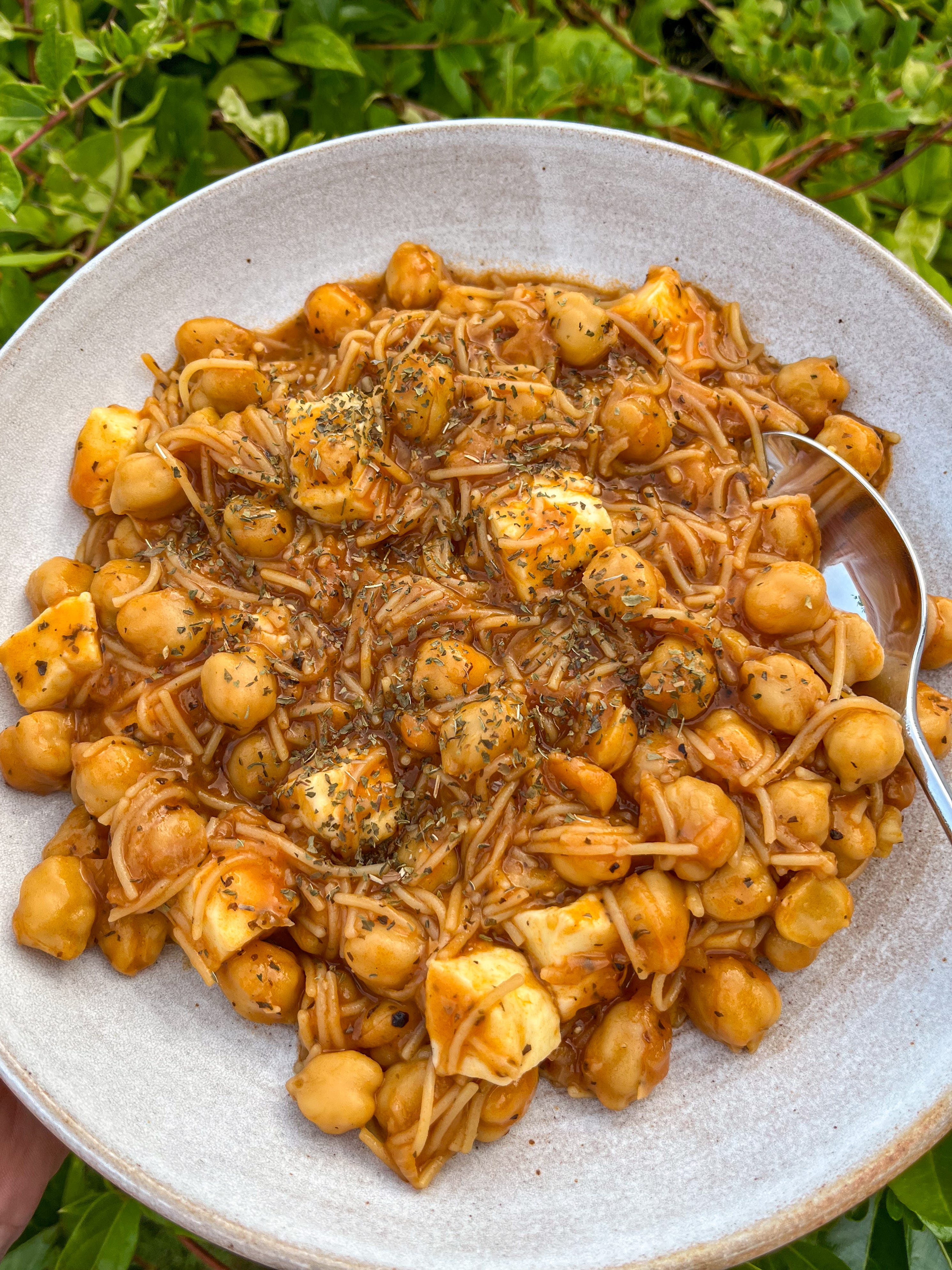
Chickpea, Halloumi & Vermicelli Stew
Serves: 2-3, Preparation time: 5 minutes, Cooking time: 25 minutes
Assuming you have a block of long-life halloumi in the fridge, this recipe is a real weeknight hero. I’ve written it as serves 2-3 because whilst I will happily polish half of this off in just one sitting, the portions are rather large!


I always have vermicelli in the cupboard to make my Ma-ma’s lockshen pudding, but I know from the fact I get mine from Amazon and my aunt calling me recently to ask my advice on sourcing some it’s not the easiest to get hold of in run-of-the-mill supermarkets, so feel free to substitute orzo instead; you will just need to add a splash more water and extend the pasta section of cooking 5-10 minutes or so.
generous glug extra virgin olive oil
2 small onions, thinly sliced
sea salt
70g vermicelli
1 tbsp tomato puree
1 tsp dried mint, plus extra for garnish
300ml water
1 x 570g jar queen chickpeas1
160g block halloumi
cracked black pepper
Heat a generous glug of extra virgin olive oil in the bottom of a large, lidded saucepan over a medium heat. Add the onions and a good pinch of salt, and cook for at least 10 minutes until the onions are soft and starting to get golden patches.
Crumble the vermicelli into the onions, stirring and cooking for another couple of minutes until the pasta shreds start to toast.
Stir in the tomato puree and the mint, and cook for another minute or so until the puree caramelises. Add the water, and reduce the heat to medium low. Put on the lid, and cook for 10 minutes, stirring occasionally, until the pasta is just-tender. Add more salt if the stew needs it when you’re checking this.
Meanwhile, dice the halloumi.
Stir the jar of chickpeas — including the bean broth — into the pan along with the halloumi cubes. Cover again, and cook for a further 5 minutes until the chickpeas are warmed through, and the halloumi cubes are soft.
Check the seasoning a final time and serve in warm bowls topped with a further sprinkling of dried mint; don’t skip this, as the perfume adds a little something extra to each spoonful!
For my American readers I’m aware jarred beans are pricy and hard to come by; substitute 2 cans of the best quality chickpeas you can, drained and rinsed, and add a little more water to the pot to reach a stew-like consistency.
Inspiring