

Orzo.
Plus my recipe for Lemon, Pea & Anchovy Orzotto.
Welcome to ingredient, where once a month I take a deep dive into some of my favourite seasonal and store cupboard ingredients. This month I’m focusing on Orzo, that pleasing little rice-shaped pasta that is a veritable sponge for delicious Mediterranean-basin flavours.
My first recipe this month leans into one of my favourite orzo preparation methods, and gives nods to both the fact it is starting to get warmer, but also that there is still not that much exciting fresh produce about that is not a stick of rhubarb or a blood orange: my Lemon, Pea & Anchovy Orzotto may not be a looker, but it is the ultimate comfort dinner for when you’re dreaming of the warmer months to come.

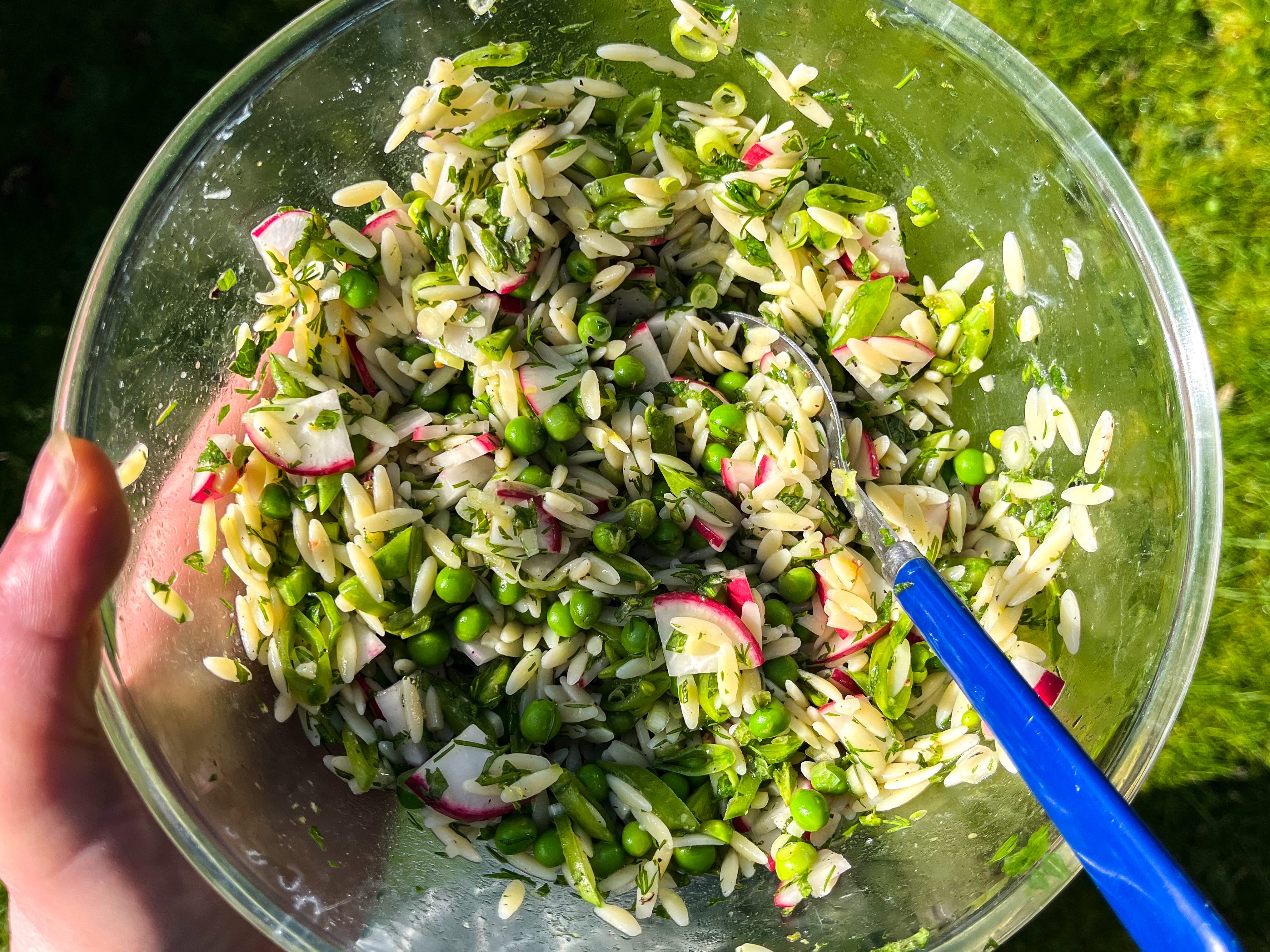
Later in the month I’ll be making you a pasta salad that will work for either lunchboxes or entertaining (my tests did both), and I’ve got a simple supper I can’t wait to share featuring my beloved wild garlic that is almost ready to pick, too.
If someone has shared this post with you (please thank them for me!) and you’re not already a subscriber, do hit the button below so you don’t miss out! And if you fancy exploring the archives for more seasonal inspiration, last March I was on hiatus, but the year before that we went big on the wild garlic!

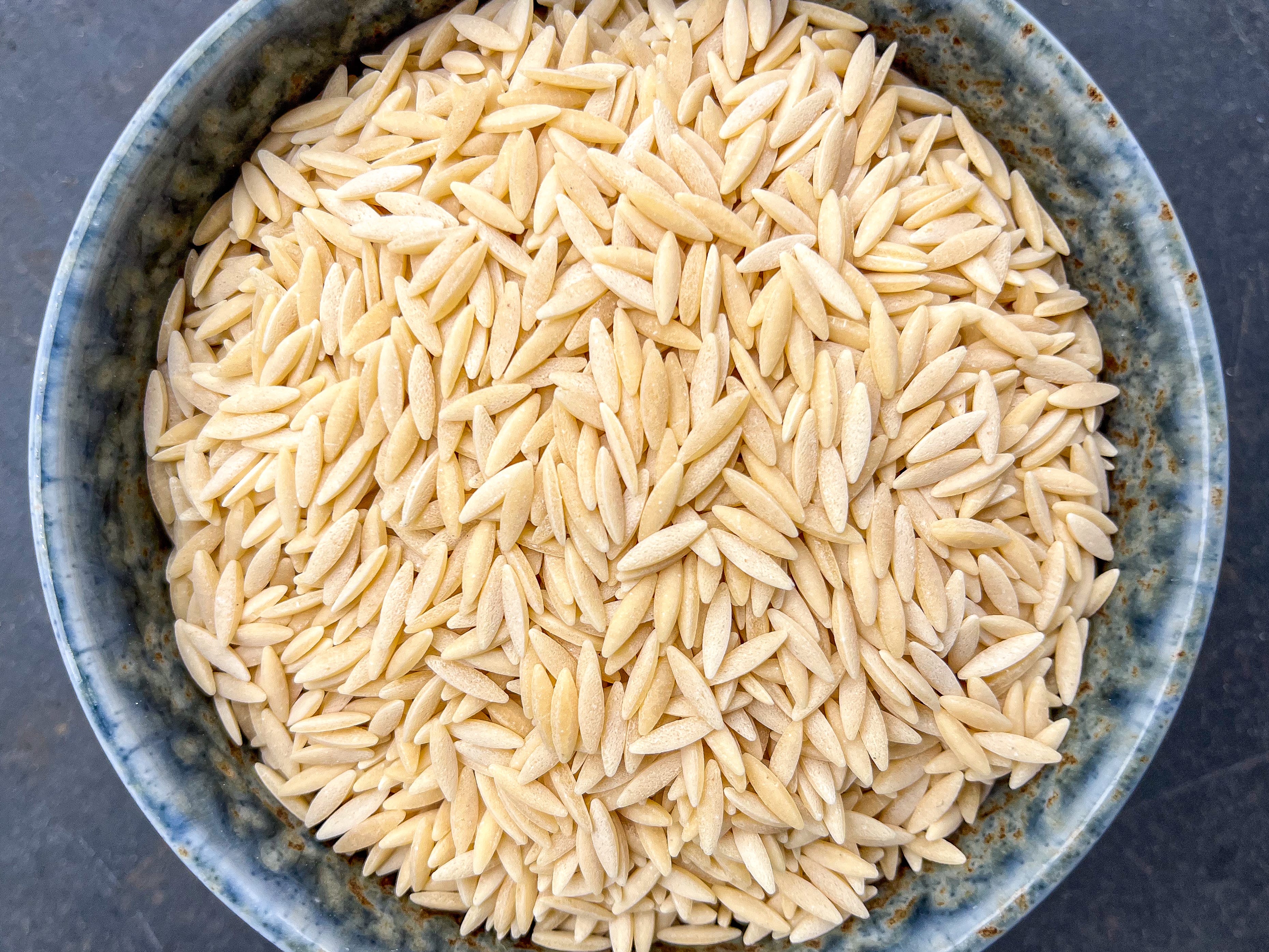
I purchased my first bag of orzo pasta at Trader Joe’s on the corner of Glendon and Weyburn when I moved to Los Angeles in 2012. At the time, it was not really a shape common in British supermarkets, but something which a proliferation of American food blogs held up to be essential to both a good pasta salad, and in making a pot full of lemony Greek chicken soup (which, incidentally is what I made with it!)
Orzo is what we call risoni, the Italian pasta shape that roughly translates as ‘large grains of rice’, or kritharaki in Greek, which again translates as ‘little barley’. Piñones is the Spanish name, which charmingly translates as ‘pine nut’. With a smooth mouthfeel and the lovely secondary ability to cook in gradually added liquid like a speedy risotto, I feel banishing it to a soup or a pasta salad (though as you can see I could not resist making you one this month, as it does make a great one!) does it a bit of a disservice. I think orzo’s most magical format is when baked in a dish with liquid for full absorption of delicious flavours, remaining tender in the middle but crisp around the edges; orzo is a pasta shape where you get the best of both worlds, a versatile pasta, and something wheat-based that can also behave like the rice that informs it’s shape when called for (unless you’re making a pilaf of course where orzo and rice used together will yield the most wonderful texture.)
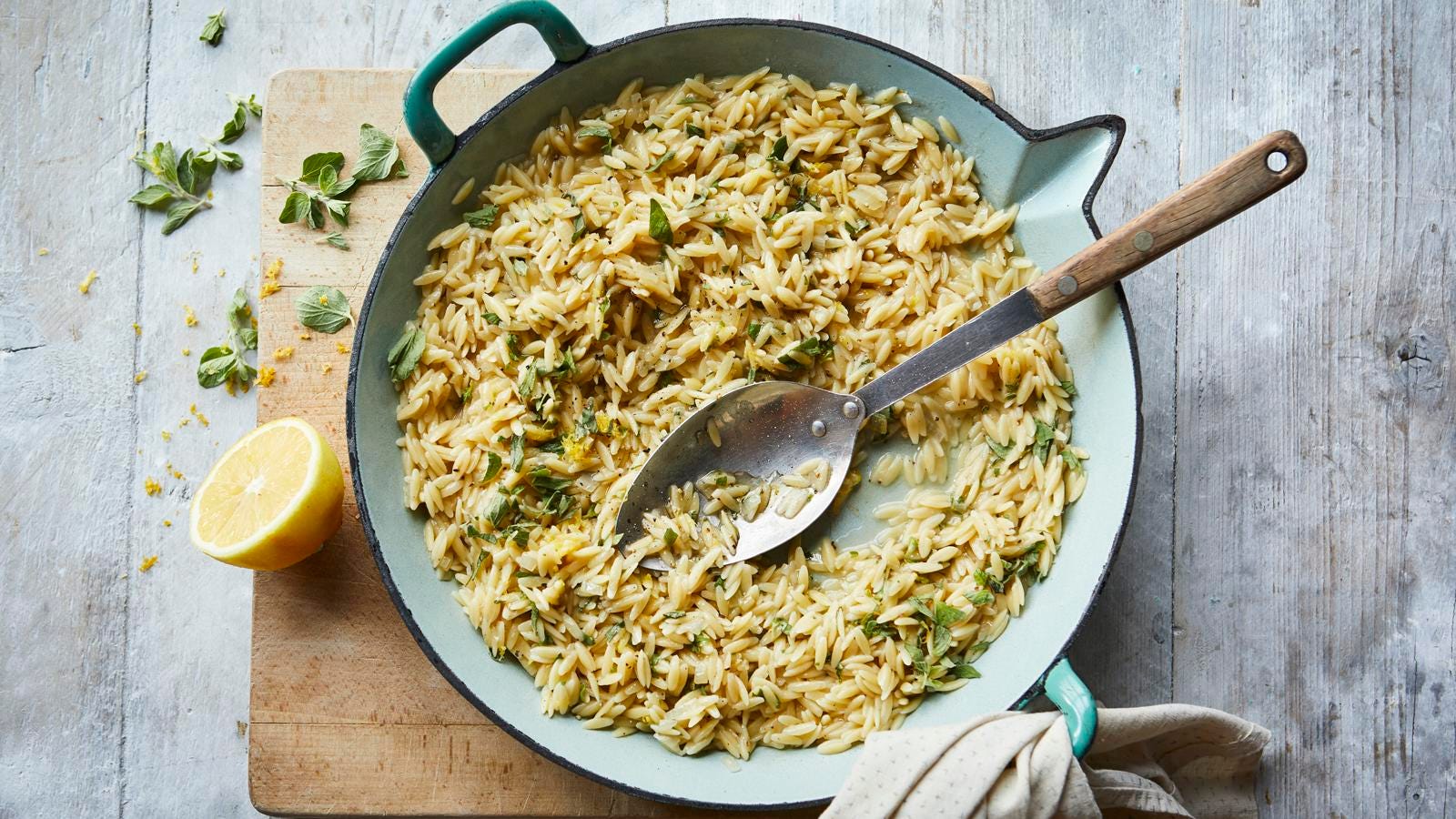
Even though orzo is now available in every supermarket (some annoyingly fatter than others in shape which makes recipe development for absorption-style recipes a real pain!) I don’t think we use it to as full an effect here as our American and Mediterranean cousins, but when it does appear in recipes it’s pleasing shape and ease of preparation do really appeal. Before this month I’ve only published two orzo recipes which honestly don’t feel like enough, and they’ve been absolute hits: my Orzo Risotto with Lemon & Fresh Oregano over at BBC Food has a 4.8 rating and people have actually come up to me in real life to tell me how much they love the recipe, and my One Pan Greek Lamb Meatballs with Orzo and Feta on my website is still both a reader hit and something I make often for family who come to stay.

I’ve written a few recipes now with Substack’s recipe card and to be honest I’ve found it really frustrating to use as it does not have all the functionalities most of the cards on custom websites have (no sections in ingredient lists, to start) and as I don’t cook in US measures the volumes don’t always render right either. But what do you think?